Turbine flow meters and Coriolis mass flow meters are used in winery alcohol flow measurement
The winery alcohol flow meter is mainly used to measure the liquid flow rate in the alcohol production process, and the sanitary turbine flow meter is commonly used. The following are the main product features and technical parameters:
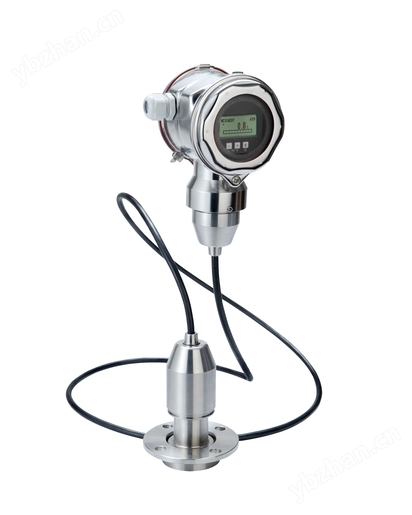
Turbine FlowMeter for Breweries
Turbine flow meter
Measurement accuracy: High precision type can reach ±0.2%, repeatability can reach 0.05%~0.2% in short term.
Signal output: output pulse frequency signal, suitable for total measurement and connection with computer, strong anti-interference ability.
Applicable scenarios: Suitable for high-pressure measurement (no need to open holes in the watch body), and can be made into an insertion type to reduce pressure loss
Structure: All are made of stainless steel or all-cemented carbide, which has strong corrosion resistance and stain resistance.
Installation: Compact size, easy installation and maintenance, large circulation capacity
- Brief description of alcohol flow meter
The measurement principle of alcohol flow meter is Faraday’s law of electromagnetic induction, and the main components of the sensor are: measuring tube, electrode, excitation coil, iron core and magnetic yoke housing. It is mainly used to measure the volumetric flow rate in conductive liquids and slurries in closed pipes. Including acids, alkalis, salts and other highly corrosive liquids. The product is widely used in petroleum, chemical, metallurgy, textile, food, pharmaceutical, papermaking and other industries, as well as environmental protection, municipal management, water conservancy construction and other fields. - Technical parameters of alcohol flow meter
Executive standard: JB/T 9248-1999
Nominal bore: DN3 to DN3000
Maximum flow rate: 15m/s
Instrument accuracy: DNl5~DN600 Value: ±0.3% (flow rate≥1m/s); ±3mm/s (flow rate<1m/s)
DN700—DN3000 ±0.5% (flow rate ≥ 0.8m/s); ±4mm/s (flow rate<0.8m/s)
Fluid conductivity: ≥5uS/cm?
Nominal pressure: 0.01MPa to 10MPa
Ambient temperature: sensor – 25°C – ten 60°C, converter and integrated – 10°C – ten 60°C
Lining materials: Teflon, polyneoprene, polyurethane, polyperfluoroethylene propylene (F46), mesh PFA
Maximum fluid temperature: 70°C for body size
Separation type Polyneoprene lining 80°C; 120°C (indicated at the time of ordering),
Polyurethane lining 80°C,
PTFE lining 100°C; 150°C (indicated at the time of ordering)
Polyperfluoroethylene propylene (F46) 100°C; 150°C (indicated at the time of ordering)
Add net PFA 100°C; 150°C (indicated at the time of ordering)
Signal and ground electrode materials: stainless steel 0Crl8Nil2M02Ti, Hastelloy C, Hastelloy B, titanium, tantalum, platinum/iridium alloy, stainless steel coated tungsten carbide
Electrode scraper mechanism: DN300-DN3000
Connecting flange material: carbon steel
Grounding Flange Material: Stainless Steel 1Crl8Ni9Ti
Imported protective flange material: DN65—DNl50 stainless steel 1Crl8Ni9Ti, DN200~DNl600 carbon steel ten stainless steel 1Crl8Ni9Ti
Housing protection: DNl5~DN3000 separated rubber or polyurethane lined sensor IP65 or IP68, other sensors IP65
Pitch (separate type): The distance between the converter and the sensor is generally not more than 100m - Basic characteristics of alcohol flow meter
- The measurement is not affected by changes in fluid density, viscosity, temperature, pressure and conductivity;
- There are no obstructive flowing parts in the measuring pipe, no pressure loss, and the requirements for straight pipe sections are low.
- Series nominal diameter DN15~DN3000. There are a variety of options for sensor linings and electrode materials;
- The converter adopts a novel excitation method, with low power consumption, zero point stability and high accuracy. The flow range can reach 1500:1;
- The converter can be integrated or separated with the sensor;
- The converter adopts 16-bit high-performance microprocessor, 2x16LCD display, convenient parameter setting, reliable programming;
- The flowmeter is a two-way measurement system, equipped with three accumulators: forward total, reverse total and difference; Can be displayed. bank, reverse flow, and has a variety of outputs: current, pulse, digital communication, HART;
- The converter adopts surface mount technology (SMT), with self-test and self-diagnosis functions;
- Confirmation of the alcohol flow measurement range
Generally, the flow rate of the measured medium of the industrial alcohol flow meter should be 2~4m/s, and under special circumstances, the minimum flow rate should not be less than 0.2m/s and the maximum should not be greater than 8m/s. If the medium contains solid particles, the common flow rate should be less than 3m/s to prevent excessive friction between the liner and the electrode; For viscous fluids, the flow rate can be selected greater than 2m/s, and the larger flow rate helps to automatically eliminate the effect of sticky matter attached to the electrode, which is conducive to improving the measurement accuracy.
Under the condition that the range Q has been determined, the size of the flowmeter caliber D can be determined according to the range of the above flow rate V, and its value is calculated by the following formula:
Q=πD2V/4
Q: Flow rate (㎡/h) D: Pipe inner diameter V: Flow rate (m/h)
The range Q of the alcohol flow meter should be greater than the expected maximum flow value, and the normal flow value should be slightly greater than 50 of the full scale scale of the flow meter.
- Installation requirements for alcohol flow meters
The protection level of the electromagnetic flow sensor shell is generally IP65 (international GB4208 shell protection level – dust and collision resistance), and the selection of its installation site can be referred to Chapter 5, Section 5. The main requirements for the installation environment are:
(1) The sensor should be installed in a dry and ventilated place, avoid damp and prone to flooding, and avoid direct sunlight and direct rainwater.
(2) It should be avoided as much as possible in places where the surrounding environment temperature is too high. The integrated structure of the alcohol flow meter is also subject to the ambient temperature of the electronic components, which is lower.
(3) There should be no strong leakage current on the pipeline where the sensor is installed, and it should be kept away from equipment with strong electromagnetic fields, such as large electromechanical and large transformers, etc., as far as possible to avoid electromagnetic field interference;
(4) There should be no strong vibration in the pipe or ground where the sensor is installed, especially the integrated instrument;
(5) The location of the sensor installation should consider the space for on-site maintenance by the staff.
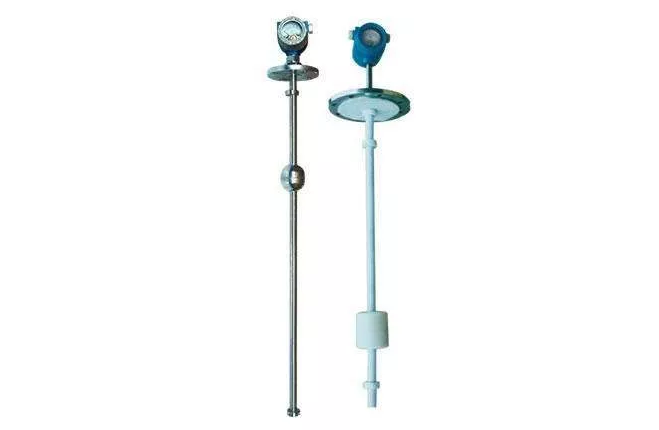
Coriolis mass flow meters for distilleries
The application of Coriolis mass flow meters in wineries is mainly reflected in the precise measurement of alcohol content and the optimized control of production processes. Below is a summary of its core application scenarios and technical advantages:
I. Main Application Scenarios
Fermentation Process Monitoring
During the alcoholic fermentation stage, Coriolis mass flow meters monitor the mass flow and alcohol concentration of raw materials (such as fruit juice and malt) in real time to ensure stable fermentation conditions and prevent fluctuations in alcohol content due to temperature or raw material ratio deviations. For example, wineries like Moutai and Wuliangye have installed HK-CMF Coriolis mass flow meters produced by Xiamen Hongkong in the feed pipelines of fermentation tanks to track changes in the density of the fermentation liquid and infer the rate of alcohol production.
Distillation and Refining Control
In the distillation process, the flow meter measures changes in the density of condensed liquid from steam, providing real-time feedback on alcohol concentration improvements, helping to adjust distillation parameters (such as heating temperature and reflux ratio), reduce repeated distillation, and improve production efficiency. For instance, companies like Yanghe Co., Ltd. use it to optimize distillation tower operations, ensuring the liquor reaches the target alcohol content.
Blended Liquor Production
When blending liquors of different alcohol concentrations, Coriolis flow meters synchronize the measurement of the density and flow of multiple raw materials, achieving precise proportion control and avoiding errors from manual blending. For example, the HK-CMF series Coriolis mass flow meters from HOMKOM Hongkong can directly output concentration data for automated adjustment in the blending process.
Bottling and Quality Control
During the final bottling stage, the flow meter ensures the consistency of each bottle’s filled volume through high-precision mass flow measurement (±0.1% ~ 0.5% error) while online density detection verifies whether the alcohol content meets the factory standards.
II. Technical Advantages
Multi-Parameter Synchronous Measurement
It can simultaneously obtain mass flow, density, temperature, and other parameters, and directly calculate alcohol content through the fixed relationship among density, temperature, and alcohol concentration (using lookup tables or built-in algorithms).
Strong Anti-Interference Capability
Made with corrosion-resistant materials (such as Hastelloy) and a sealed design, it can withstand the high acidity of the liquor and is not affected by fluid viscosity, bubbles, or pressure fluctuations.
Non-Intrusive Detection
Measurement can be completed without contacting the liquor, preventing sensor contamination and making it especially suitable for sterile bottling lines and high-end liquor production.
Real-Time and Automation
Data can be transmitted to the control system via industrial buses (such as Modbus), enabling closed-loop adjustments on the production line and reducing the frequency of manual sampling inspections.