There is no best flowmeter, only the most suitable one. A 10-year chemical factory expert revealed that electromagnetic flow meters have strong anti-interference capabilities but are limited to conductive liquids, while vortex flow meters are suitable for a wide range of media but are afraid of vibration. The target flowmeter has a measured accuracy of 0.2% in extreme environments, making the production line more stable and maintenance costs lower. “
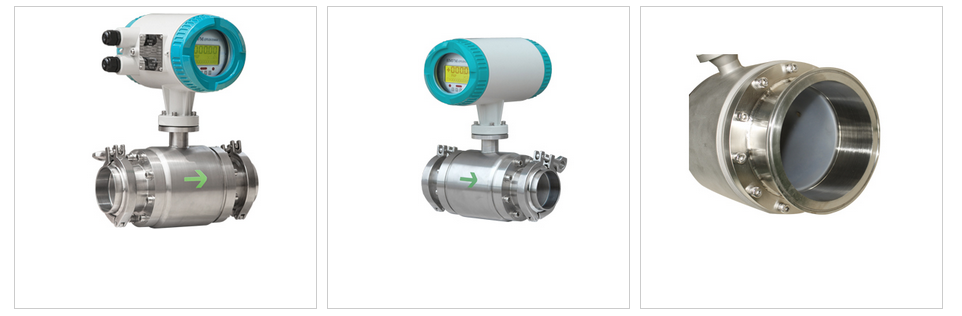
electromagnetic flowmeter and vortex flowmeter
In chemical production, the selection of flow meters is directly related to production efficiency and safety. A chemical plant master with 10 years of experience shared his insights on the selection of electromagnetic flowmeters and vortex flowmeters, revealing some key but often overlooked selection points. This article will be based on the experience of this master and combined with the latest industry data to help readers select flow meters more accurately.
This article reveals the real performance differences between electromagnetic flowmeters and vortex flowmeters in practical applications through the first-hand experience of a senior chemical industry practitioner, especially providing practical suggestions for common problems such as medium dirt, complex components, and installation environment vibration. Meanwhile, we will take the target flowmeter as a case study to compare and analyze its applicability, providing users with a more comprehensive perspective.
1、 Electromagnetic flowmeter vs. vortex flowmeter: core differences
Measuring principle
Electromagnetic flowmeter: According to Faraday’s law of electromagnetic induction, it is suitable for conductive liquids.
Vortex flowmeter: utilizing the Karman vortex principle, suitable for gases, vapors, and some liquids.
Applicable Medium
Electromagnetic flowmeter: mainly used for liquids with high conductivity, such as water, sewage, acid-base liquids, etc.
Vortex flowmeter: It can be widely used in various media such as gases (including steam), liquids, etc., but it is highly sensitive to low flow rates or media containing impurities.
Accuracy and stability: The accuracy is generally between 0.5% and 1%, and it is sensitive to vibration environments.
2、 Key points for practical selection
Clarify the properties of the medium
Electromagnetic flow meters are preferred for conductive liquids.
Clean and particle free gases or liquids are more suitable for vortex flowmeters.
Evaluate working conditions
For situations where there is strong pipeline vibration, vortex flowmeters should be avoided, while electromagnetic flowmeters exhibit stronger anti-interference capabilities.
The target flowmeter launched by our company has been specially optimized with signal processing algorithms, which can effectively suppress external vibration noise and improve reliability in harsh environments.
Although the price of vortex flowmeters is relatively low, investing in electromagnetic flowmeters with better performance or specific models such as Jingchuan target flowmeters may be more cost-effective in situations where high precision and long-term stability are required.
3、 Case Study – Target Flow Meter
Overview of Characteristics
High precision: achieving a measurement accuracy of 0.2%.
Strong adaptability: It can work normally in high temperature (up to 500 ° C) and low temperature (as low as -200 ° C) environments.
Intelligent function: Supports multiple output forms and is easy to integrate into existing control systems.
Application Scenarios
Monitoring of corrosive liquids in chemical plants.
Monitoring of blast furnace gas flow in steel plants.
Management of inflow and outflow in water treatment facilities.
user feedback
Since switching to our company’s target flowmeter, our production line has operated more smoothly and maintenance costs have been greatly reduced. “- Equipment Manager of a large chemical enterprise
IV. Summary
Choosing the right flowmeter not only depends on specific application requirements, but also involves careful consideration of on-site conditions. I hope the above content can help you make wise decisions between electromagnetic flowmeters and vortex flowmeters. If you are looking for a solution that can meet high-precision requirements and adapt to harsh working conditions, you may consider our company’s target flowmeter.
Selection of electromagnetic flowmeter
The dosing condition is different from ordinary water supply and drainage measurement, and generally involves complex conditions such as trace flow rate, corrosive media, gas-liquid mixing, easy wall fouling, strong electromagnetic interference, negative pressure/low pressure, etc., which are also the core causes of inaccurate flow meter measurement and frequent failures. Below, all selection difficulties are classified and analyzed, and the causes and pain points of the difficulties are explained.
1、 Difficulty in flow conditions: Controlling small flow metering is the most challenging
- The flow span is extremely large, and the range is difficult to match
The dosing system generally has a significant difference in dosage between day and night, with high and low loads: large dosing during the day and small dripping at night can result in a difference of several tens of times between the minimum and maximum flow rates.
Pain point: The conventional electromagnetic range ratio is only 50:1, and low flow directly causes zero drift and zero reading; Choose a large range, small dosage cannot be measured; Selecting a small range results in peak flow exceeding the limit.
Conventional electromagnetic sensors with a diameter of DN15 or above are difficult to stably measure trace amounts of liquid medicine at a rate of tens of liters per hour, and forced use will inevitably result in measurement failure. - The diameter of the pipeline is too large and the flow rate does not meet the standard
The effective measurement range of electromagnetic flowmeter is fixed at 0.3~5m/s.
Most of the dosing pipelines are DN20 and DN25 thick pipelines, with extremely small dosing amounts. The native flow velocity of the pipeline is always below the measurement lower limit of 0.3m/s, and the instrument sensing signal is weak, making it highly susceptible to interference and jumping.
Difficulty: The on-site pipeline shaping transformation is troublesome. Installing a variable diameter pipe to reduce the diameter will increase the pipeline resistance and pressure, affecting the stability of the metering pump discharge. Many sites cannot carry out diameter reduction transformation, and the selection is in a dilemma.
2、 The difficulties of the medium itself include corrosion, scaling, and low conductivity, which are the three major hard thresholds
- The variety of drugs is complex, and the difficulty of matching anti-corrosion materials is high
There are various types of dosing media: PAC/PAM flocculants, sodium hypochlorite, hydrochloric acid, caustic soda, dilute sulfuric acid, saline water, hydrogen peroxide, and various chemical additives. The corrosion types are different: chloride ion corrosion, acid-base corrosion, and oxidation corrosion.
Pain points:
① Low price 316L electrodes are not resistant to chlorine and strong acids; Hastelloy is not resistant to hydrofluoric acid; Titanium electrodes are not resistant to strong reducing acids, while tantalum electrodes are expensive;
② Rubber lining is not resistant to acid and alkali, and is prone to collapse under negative pressure. PTFE/PFA is corrosion-resistant but has poor rigidity, and is prone to deformation during installation and compression;
③ When the concentration of the same agent changes, the corrosiveness will change sharply. In the early stage, low concentration selection will be used, and in the later stage, the concentration of the agent will rapidly corrode the instrument. - The medicine is viscous and contains a lot of flocculants, making the electrode prone to scaling and adhesion
PAM、 Polymer flocculants and organic agents have high viscosity and are easily attached to the surface of electrodes and liners, forming an insulating layer to isolate induced magnetic fields.
Difficulty: There is no unified pattern for scaling, and factors such as water temperature, drug concentration, and static sedimentation can exacerbate wall adhesion; There is no universal anti scaling structure, frequent manual cleaning is time-consuming and laborious, and automatic cleaning of accessories will significantly increase costs. - Low conductivity drugs cannot be directly measured by ordinary electromagnetic methods
Electromagnetic flow meters rely on liquid conductivity for operation, and conventional models require a medium conductivity of ≥ 20 μ S/cm
The conductivity of pure water blending agents, dilution solutions, and some organic solvent solutions is often lower than 10 μ S/cm.
Difficulty: Ordinary electromagnetic is completely ineffective, low conductivity specialized electromagnetic has a high premium, and many projects have limited budgets, so they can only be forced to switch to gears and mass flow meters. Changing the instrument category will re adapt to the automatic control system.
4. The decomposition of chemicals produces gas, and there is severe interference between the gas and liquid phases
Sodium hypochlorite, hydrogen peroxide, and some reducing agents are prone to decompose and produce tiny bubbles at room temperature; The outlet of the metering pump is prone to cavitation, and air is mixed into the pipeline.
Bubbles can block the electrode from coming into contact with the liquid, directly causing severe fluctuations in numerical values.
Difficulty: It is impossible to completely eliminate gas production, and it is difficult to eliminate bubble interference solely through hardware. Ordinary excitation algorithms do not have bubble compensation, and installing a deaerator will occupy a small space in the medicine cabinet.
Selection of vortex flow meters
Although vortex flowmeters have strong universality, many users are prone to falling into the misconception of “empiricism” in actual selection, resulting in instruments that are either inaccurate or unusable.
Based on the latest industry practices and common problems, I have summarized the 5 most common misconceptions in the selection of vortex flowmeters for you to avoid:
Misconception 1: Only looking at the diameter of the pipeline, not the actual flow rate (most commonly!)
This is the biggest and most fatal mistake in the selection process.
Wrong approach: If the on-site pipeline is DN100, choose a DN100 flowmeter directly.
consequence:
Big horse pulling small car “: If the pipeline is large but the actual flow rate is very small (flow rate below the lower limit of the instrument, such as liquid below 0.5m/s), the vortex flowmeter cannot sense the vortex signal at all, and the display is zero or the data jumps.
Small horse pulling big car “: If the actual flow exceeds the upper limit of the instrument, it will cause sensor overload, and long-term operation may damage the probe.
The correct approach is to determine the caliber based on the flow rate. Minimum traffic, common traffic, and maximum traffic must be provided. If the flow velocity corresponding to the diameter of the pipeline is not within the measurement range of the vortex street (0.5-10m/s for liquids and 5-60m/s for gases), diameter reduction (with a variable diameter pipe) or expansion treatment must be used.
Misconception 2: Neglecting the state of the medium (steam, viscosity, impurities)
Vortex street is not a “multimeter”, it is very sensitive to the state of the medium.
Wrong approach:
Steam is not classified by type: it is unclear whether it is saturated steam or superheated steam. The saturated vapor density varies greatly with pressure and must be compensated with temperature and pressure; Overheated steam requires checking the density table based on temperature and pressure.
High viscosity medium: used to measure high viscosity liquids such as heavy oil and asphalt (viscosity>20cP). High viscosity can suppress the formation of vortex streets, resulting in significant measurement errors and even inability to measure.
Correct approach: Clearly state the medium name, temperature, pressure, and viscosity. Steam measurement must be equipped with temperature and pressure compensation; It is recommended to choose other types of flow meters (such as elliptical gear or electromagnetic flow meters) for high viscosity or dirty media.
Misconception 3: Neglecting the on-site installation environment (vibration and straight pipe section)
Many instruments are accurate in the laboratory but inaccurate when installed on site, often due to poor consideration of the environment.
Ignore vibration: Installed next to pumps, air compressors, or strong vibration pipelines. Vortex street is based on frequency principle and is its “enemy”, which will directly overwhelm the signal.
The correct approach:
Avoid the earthquake source: try to stay away from the source as much as possible, or choose a capacitive/type vortex street and install shock-absorbing brackets.
Ensure straight pipe section: Generally, it is required to have a diameter of 10D before and 5D after (D is the pipe diameter). If there are elbow valves, they need to be longer (15D-20D before). If there is not enough space, it is necessary to inform the manufacturer in advance to see if there is a special rectification plan.
Misconception 4: One size fits all configuration for temperature and pressure compensation
Wrong approach:
Gas/steam uncompensated: Gas and steam are greatly affected by temperature and pressure, and their density changes. If not compensated, only the volumetric flow rate under operating conditions will be measured, rather than the mass flow rate or standard flow rate, resulting in significant errors.
Blind compensation for liquids: For incompressible liquids such as water and oil, without significant temperature changes, temperature and pressure compensation is not actually necessary. Instead, it increases costs and fault points.
The correct approach:
Gas/Steam: Temperature and pressure compensation (integrated or split) must be selected.
Liquid: Generally not required, unless it is a high-temperature liquid that requires temperature correction for density.
Misconception 5: Mismatch between output signal and system
Wrong practice: I bought a meter with 4-20mA output, but the on-site control system (PLC/DCS) requires pulse signals or RS485 communication; Or you may have bought a battery powered meter, but the installation location cannot replace the battery.
Correct approach: Confirm what signals are needed in the control room.
Check the total quantity: select pulse output.
Check instantaneous quantity/input system: choose 4-20mA or RS485.
Power supply: If there is an external power source, choose 24VDC (stable), and if there is no power source, choose a lithium battery (considering the convenience of replacement).