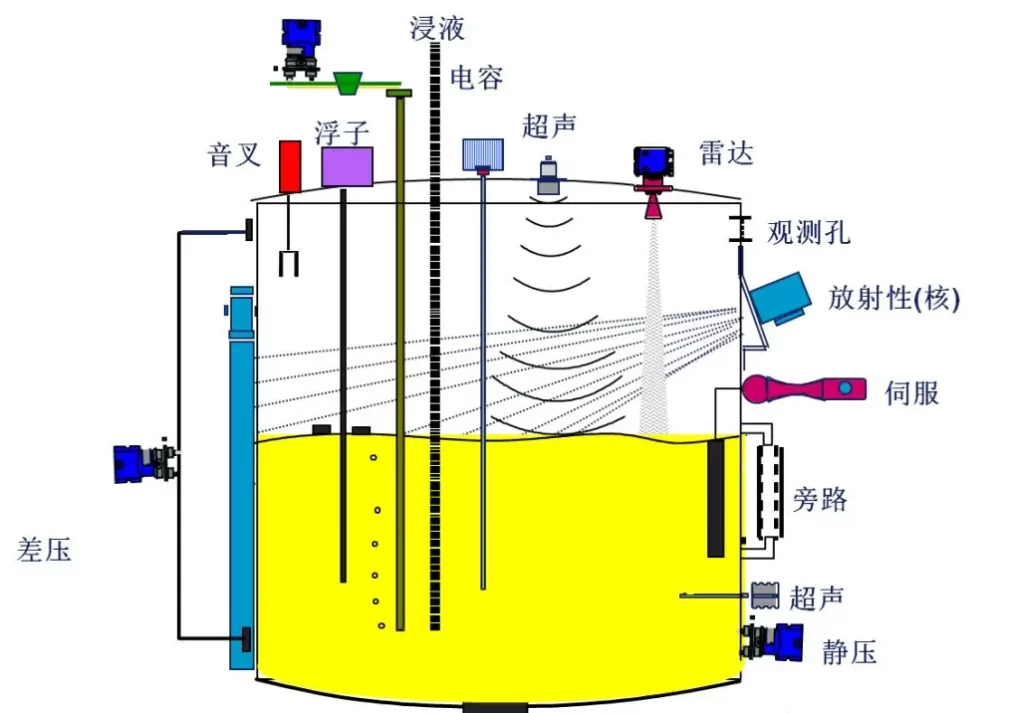
Liquid level gauge is used to measure and display the height of the liquid level in the tank, the liquid level gauge is very many kinds. Commonly used liquid level meters are: glass tube level meter, magnetic flap level meter, hydrostatic level meter, differential pressure level meter, float level meter, radar level meter, capacitance level meter, radio frequency conductive level meter, magnetic stretching level meter, servo level meter, etc.; measurement of the level of ultrasonic level meter and radioactive level meter and so on.
From the measurement principle can be divided into contact measurement and non-contact measurement, pressure principle measurement and so on. Below we introduce the working principle and application of various liquid level meters one by one.
Principle of operation of the liquid level meter
1: The principle of glass tube level gauge:
Glass tube level gauge is designed based on the principle of connector, composed of glass tube and the main body of the liquid level gauge, the liquid path is through the receiver with a flange or conical pipe threads and the measured container connected to form the connector, the liquid level observed through the glass tube is the same as that in the container, i.e., the liquid level height.
According to HG21592-95 standard production of liquid level gauge, the two ends of the needle valve not only play the role of the shut-off valve, its internal steel ball has the function of the backstop valve, when the liquid level gauge accidentally broken leakage, the ball can be in the medium under the action of the pressure to automatically close the liquid channel, to prevent a large amount of liquid outflow to play a security role in the protection, the premise is that the pressure in the tank> 0.2Mpa. liquid level gauge to change the material of the parts or increase some ancillary components can be achieved corrosion resistance. Increase some accessory parts can achieve anti-corrosion, heat preservation, frost, lighting and other functions.
As the glass tube is fragile, generally the glass tube level gauge will be equipped with a sheath to protect the glass tube, and some level gauges will also be equipped with a sampling valve, which is used for sampling the liquid in the tank, or draining the liquid in the glass tube level gauge when maintenance is carried out.
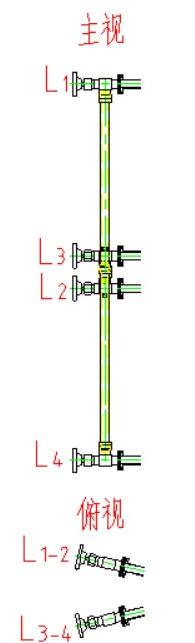
It is generally recommended that the length of the glass tube level gauge should not exceed 2 metres, if you want to measure the level of more than 2m high, it is recommended to use multiple staggered installation, as shown in the figure below:
Scope of application and characteristics:
Glass tube level meter has the advantages of simple structure, economic and practical, easy installation, reliable work, long service life and so on.
But the shortcomings are also obvious: the inner surface is easily stained, resulting in reading difficulties, and it is not convenient for remote transmission and adjustment.
As a basic level indicator level meter, this product is widely used in the simplest level measurement occasions and automation is not very high degree of large-scale engineering projects in the liquid level measurement and monitoring.
The installation of glass tube level gauge should follow the following steps:
(1), before the installation of the level gauge, please carefully unpack the box, so as not to break the glass because of the nails on the box. Then don’t hit the glass tube level gauge body too hard when installing. Don’t have too much vibration.
(2), after the installation of the level gauge, when the medium temperature is very high, do not open the valve immediately, should be preheated for 20-30 minutes, until the glass tube has a certain temperature, and then slowly open the valve.
Valve opening procedure: first slowly open the upper valve, and then slowly open the lower valve, so that the measured medium slowly into the glass tube.
(3), the level meter in use, should be regularly cleaned glass tube inside and outside the wall of dirt, in order to maintain a clear level display. Cleaning procedure: first close the upper and lower valves connected with the container, open the drain valve, release the residual liquid in the glass tube, use the appropriate cleaning agent or use a long rod brush to pull the rubbing method to remove the dirt on the inner wall of the tube
2: Magnetic Flap Liquid Level Meter
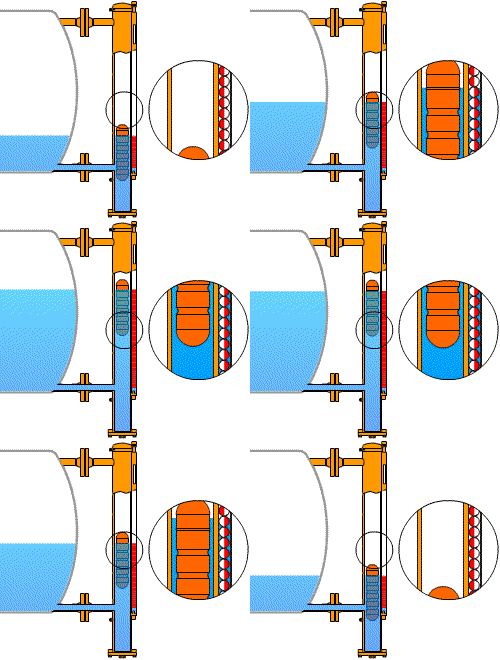
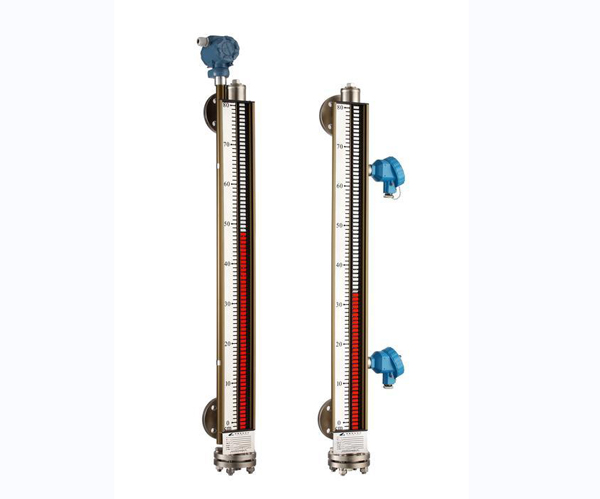
It works according to the principle of buoyancy and magnetic coupling. When the liquid level in the measured vessel rises and falls, the float in the main tube of the magnetic flap level gauge rises and falls with it, and the permanent magnet in the float is transferred to the field indicator through magnetic coupling to drive the red and white flap columns to turn over by 180°. When the liquid level rises, the flap columns will turn from white to red, and when the liquid level falls, the flap columns will turn from red to white, and the indicator’s red and white boundaries will be the actual height of the liquid level of the medium in the vessel, so as to realise the indication of the liquid level. Liquid level indication.
It can be displayed locally and controlled remotely. For remote control, the float in the magnet and sensor (reed switch) role, so that the number of components connected in series into the circuit (such as fixed-value resistor) changes, and then the electrical quantity of the instrument circuit system changes. That is, a change in the position of the magnetic float causes a change in the electrical quantity.
The change in electrical quantity is detected to reflect the liquid level in the vessel. It can directly output the resistance value signal, or cooperate with the use of the transmission module, output current value (4 ~ 20mA) signal; at the same time, cooperate with other converters, output voltage signal or switch signal. Thus the remote transmission, analysis and control of electrical signals can be achieved.
Magnetic Flap Level Gauge has the feature of direct-reading on-site display. There is no need to combine multiple level gauges.
Because of the magnetic coupling isolator closed structure. Especially suitable for flammable, explosive and corrosive toxic liquid level detection. Thus, the original complex environment of the liquid level detection means to become simple and reliable security.
According to the different installation positions, there are side-mounted magnetic flip-plate level meter, top-mounted liquid level meter.
Scope of application:
Widely used in petroleum processing, food processing, chemical industry, activated carbon dosage device, lime dosage system, potassium permanganate dosage equipment, dosing equipment, pharmaceuticals, electric power, papermaking, metallurgy, ships and boilers and other fields of liquid level measurement, control and monitoring.
Advantages: Magnetic float level gauge can achieve high sealing, anti-leakage and suitable for high temperature, high pressure, corrosion-resistant occasions. High-temperature, high-pressure, toxic, harmful, strong corrosive media to show its superiority.
Disadvantages: magnetic float in direct contact with the medium, float sealing requirements to be strict, can not measure viscous media. Magnetic materials such as demagnetisation can easily lead to the level meter can not work properly, the flap is easy to jam, resulting in the inability to indicate the remote transmission.
3: Hydrostatic liquid level gauge
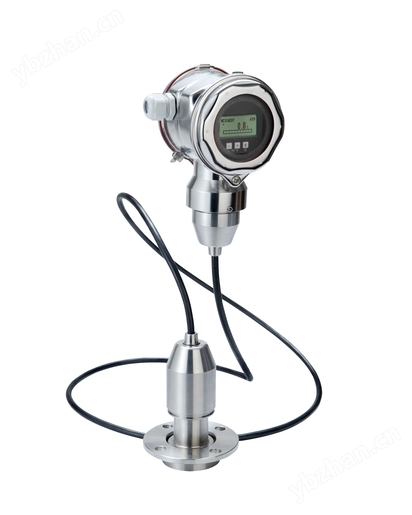
Principle:
When the pressure sensor penetrates deep into or touches the measured liquid, the medium pressure P that it will be subjected to is proportional to the height h of the level of the measured liquid, and the linearity is very high:
That is: P = ρgh where:
ρ: the density of the measured medium (kg/m3)
g: the local acceleration of gravity (m/s2)
h: the height of the measured liquid (m)
For a certain measured medium and the same location, ρ and g are constants. It is easy to get: h=P/(ρg)
The above expression is the core formula in the working principle of the level transmitter.
Through the transmitter probe installed at the bottom of the vessel (with sensors on it) detects the pressure proportional to the liquid level height and converts it into an electrical signal, which is transmitted to the conversion unit on the liquid storage vessel, and through the conversion this electrical signal related to the liquid level height is turned into a standard signal of 4~20mA and output.
Hydrostatic level gauges are available in bottom-mounted and input types.
Hydrostatic level gauge is only used for tanks and atmospheric liquid level measurement, if there is pressure in the tank should be used differential pressure level gauge.
Advantages: hydrostatic pressure is proportional to the liquid level, so the use of pressure gauges to measure the hydrostatic pressure of the liquid column on the reference surface can be measured level. Wide range of popularity, easy to calibrate.
Disadvantages: because of its great influence by the density of the medium and temperature, so often poor accuracy, and to eliminate these effects, the need for many other test instruments, the result is to build a complete set of hydrostatic pressure measurement system is very high.
4: Differential pressure liquid level gauge
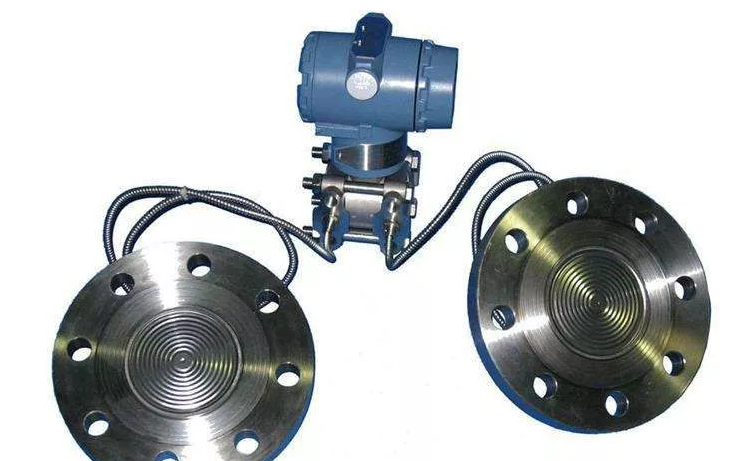
Principle:
Differential pressure level transmitter is an electrical component that measures the difference between high and low pressure and then converts it into current signal by the conversion part to be transmitted to the control room. Differential pressure level meter is mainly used for liquid level measurement of closed pressure vessel. The size of the differential pressure also represents the size of the liquid level height. Differential pressure gauges are used to measure the differential pressure between the gas and liquid phases to know the liquid level.
When measuring the liquid level with a differential pressure transmitter, the positive and negative pressure guide tubes are filled with liquid due to the different locations where the differential pressure transmitter is installed, and these liquids cause the differential pressure transmitter to have a fixed differential pressure. When the liquid level is zero, it causes the differential pressure gauge to indicate not at the zero point, but to indicate a positive or negative indication deviation.
In order to indicate correctly and eliminate this fixed deviation, it is necessary to move the zero point down or up, i.e. to perform a “zero migration”. This differential pressure value is called the migration. If this value is positive, the system is said to be positively migrated; if it is negative, the system is negatively migrated; and when this value is zero, there is no migration.
Application scope:
The product has reliable performance and excellent measurement level. It is generally suitable for water-based media, crude oil or other liquid level level measurement. When using the immersion method to measure and control the liquid level, it is convenient to use a level transmitter with a standard output signal: it can be directly coupled with CNC instrumentation and is interchangeable.
5: Float liquid level gauge
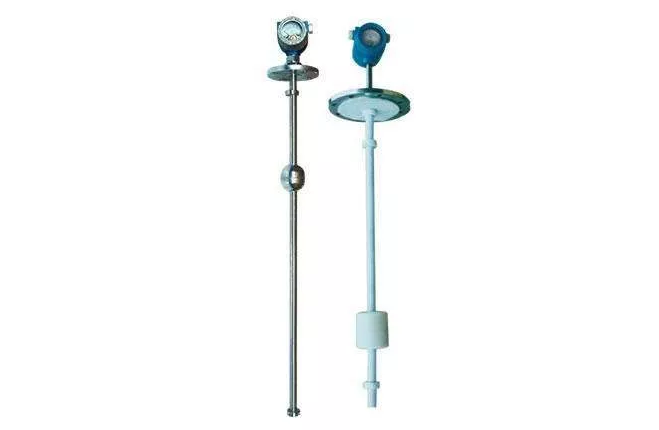
Principle:
Float level gauge structure is mainly based on the principle of buoyancy and static magnetic field design and production. The position of the float with a magnet (referred to as float) in the measured medium is affected by buoyancy: changes in liquid level lead to changes in the position of the magnetic float. The magnets and sensors (reed switches) in the float act to change the number of components (e.g. fixed-value resistors) connected in series into the circuit, which in turn changes the electrical quantities of the instrument circuit system. That is, a change in the position of the magnetic float causes a change in the electrical quantity.
By detecting the change of electrical quantity to reflect the liquid level in the container. The level meter can directly output resistance value signals, can also be used in conjunction with the use of the transmission module, the output current value (4 ~ 20mA) signals; at the same time, with other converters, the output voltage signal or switching signals. This enables the remote transmission, analysis and control of electrical signals.
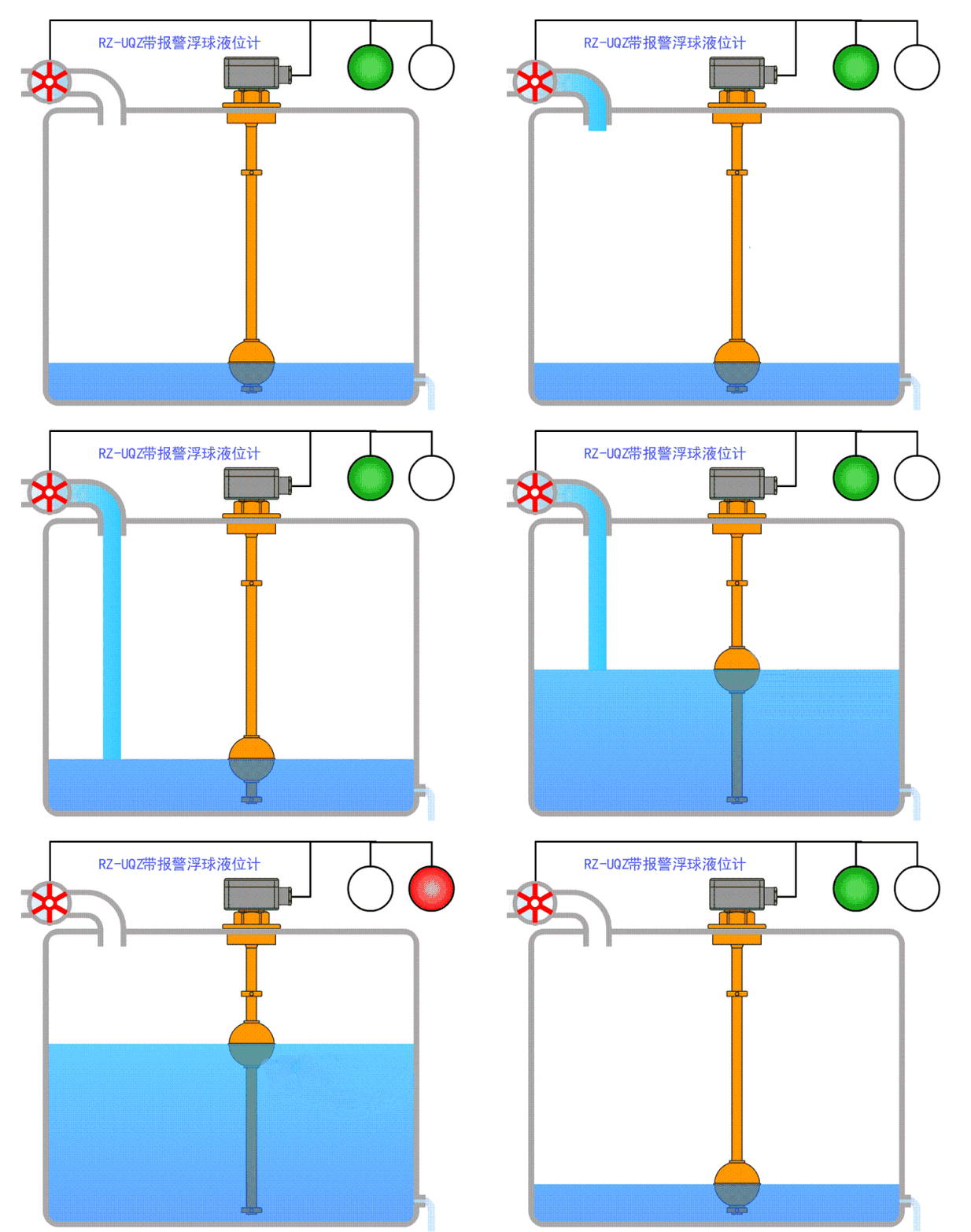
Note: The measured medium should not contain ferromagnetic impurities.
Float level gauge has the following three installation methods:
1: Side bottom mounting 2: Top mounting 3: Side side mounting
6: Radar Liquid Level Meter
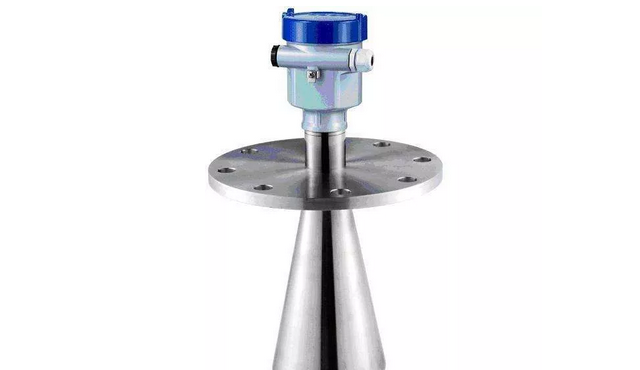
Principle:
Radar Level Gauge is a microwave level gauge based on the time travelling principle, which is an application of microwave (radar) positioning technology. It is through a device that can emit energy waves (generally pulse signals) to transmit energy waves, energy waves encountered obstacles reflected by a receiving device to receive the reflected signal. Based on the measurement of the time difference of the energy wave movement process to determine the level change. The microwave signals are processed by an electronic device and finally converted into electrical signals related to the level.
In microwave level measurement equipment, the energy wave used is usually a high-frequency electromagnetic wave with a frequency of 8.3 GHz (mostly around 6 GHz, but also higher frequencies). The energy wave used in this equipment is a pulsed energy wave. Generally, the maximum pulse energy of pulsed energy wave is about 1mW (average power is about 1μW), which will not cause radiation damage to other equipment and personnel.
Scope of application and characteristics:
Radar Level Gauge is used for non-contact continuous measurement of the level of liquids, slurries and granular materials, and is suitable for occasions with large changes in temperature and pressure, and the presence of inert gases or vapours. It adopts the measurement method of microwave pulse (PTOF) and can work normally in the range of industrial frequency bands. Low beam energy, can be installed in a variety of metal, non-metallic containers or pipelines, no harm to the human body and the environment.
Advantages:
1, no blind area, high accuracy
2, no transmission medium, not subject to pressure changes, vacuum, temperature changes, inert gases, soot, steam and other environmental influences, can be used for the measurement of volatile media.
3, the output signal is 4mA ~ 20mA / HART protocol, calibration is simple, through the digital LCD display easy to achieve on-site calibration operation, through the software to achieve a simple configuration settings and programming
4, can be used for high temperature conditions, up to 200 ℃ process temperature, when the use of high-temperature extension of the antenna up to 350 ℃.
Disadvantages: expensive, the instrument needs to set more parameters; antenna inadvertently stained media will report an error; such as icing phenomenon need to clean up the antenna; the initial installation requires tanks without media.
7: Capacitance liquid level meter
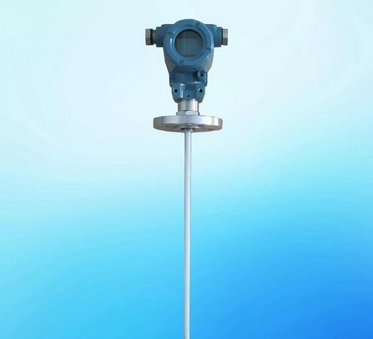
Principle:
Capacitance level meter measurement principle, the oscillation frequency of the oscillation circuit and the capacitance value is related to the change in level caused by changes in the system capacitance, which in turn changes the oscillation frequency of the oscillation circuit. The oscillation circuit in the sensor can convert the change in capacitance caused by the change in liquid level into a change in frequency, and send it to the electronic module, which will be converted into an engineering quantity and displayed through the calculation and analysis process, thus realising the continuous measurement of liquid level.
It consists of sensor, secondary instrument and other accessories. The sensor is placed on the top of the tank, the probe pole is vertically extended into the tank, and the secondary instrument is placed in other suitable places. The sensor transforms the change of liquid level into the electric pulse signal corresponding to it, and remotely transmits it to the secondary instrument for processing and displaying the liquid level height with high/low limit alarm and 4~20mA transmission output, which is suitable for liquid/solid material crop level height display, alarm, control and remotely transmitting the display or composing the system.
Scope of application and characteristics:
Advantages: simple structure, easy installation, the advantages of reliable performance; at the same time, the electrode is made of stainless steel material, corrosion resistance, insulation and conductive materials can be used, and the maintenance is small.
Disadvantages: dielectric constant needs to be stable, otherwise there will be a large error. Not suitable for dielectric constant or material humidity changes in the occasion and material particles greater than 15mm and can not be good contact with the electrode solid media.
The level meter can be widely used in petroleum, chemical, electric power, metallurgy, food, environmental protection and other industrial sectors to monitor the level of open or pressurised containers.
8: Radio Frequency Conductivity Liquid Level Meter
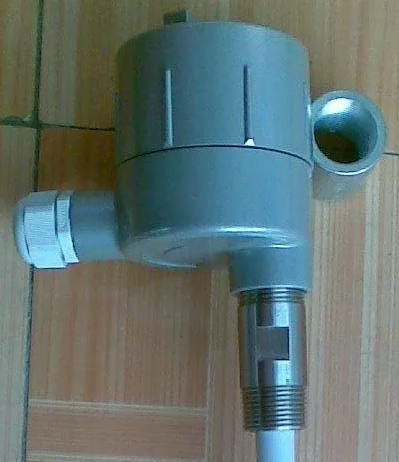
Principle:
RF conductivity is a new type of level control technology developed from capacitive, anti-hanging material, more reliable, more accurate, wider applicability, is the upgrade of capacitive level technology. The so-called radio frequency conductivity, conductivity means the reciprocal of impedance in electricity, which is synthesised by resistive component, capacitive component, inductive component, and radio frequency, that is, high-frequency radio wave spectrum, so the radio frequency conductivity can be interpreted as the measurement of conductivity with high-frequency radio waves.
Instrumentation work, the instrument’s sensor and irrigation wall and the measured medium to form the value of the conductivity, level changes, the conductivity value of the corresponding changes in the circuit unit will measure the value of the conductivity converted to the level of the signal output, to achieve the level measurement. Make the product anti-hanging material (sensor adherence of the material is called hanging material) better performance, more reliable, more accurate measurement, wider applicability of the level control technology.
Mainly consists of sensor module, electronic module and other connecting devices. Sensor unit mainly includes three parts: measuring probe, shielding pole and grounding end. The height of the measured material is reflected as the change of the conductivity between the measuring probe and the vessel wall. When the material reaches the switching point, the electronic unit reacts and drives the relay to act and output the switching signal.
The shielding pole can prevent the false action signal due to the hanging material on the electrode, and the switch control signal will be output only when the material really reaches the set point.
Scope of application and characteristics:
Microwave level controller adopts advanced radio frequency conductivity technology, which overcomes the defect that capacitive level switch cannot eliminate the influence of conductive hanging material. It has the following characteristics:
Strong versatility: applicable to a variety of occasions, can detect particles, fly ash, conductive, non-conductive liquids, viscous materials;
anti-adhesion circuit: advanced anti-adhesion circuit design, can eliminate the material adhesion and produce false error signals;
power loss protection mode: low or high level fault alarm. Field adjustable.
Widely used in liquid, slurry, dust, material level and two liquid boundary level alarm and control. Can increase the field working status indication, is a kind of cost-effective, stable and reliable level switch.
9: Magnetostrictive liquid level gauge
Principle:
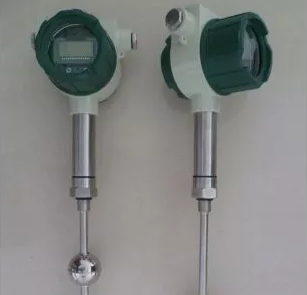
When the sensor of magnetostrictive liquid level gauge works, the circuit part of the sensor will stimulate a pulse current on the waveguide wire, and the current will generate a pulse current magnetic field around the waveguide wire when it propagates along the waveguide wire. In the magnetostrictive level meter sensor rod is equipped with a float, the float can move up and down along the measuring rod with the liquid level changes.
Inside the float there is a set of permanent magnetic rings. When the magnetic field of the pulse current meets the magnetic field of the magnetic ring generated by the float, the magnetic field around the float changes so that the waveguide filament made of magnetostrictive material generates a torsion wave pulse at the location of the float, which is transmitted back along the waveguide filament at a fixed speed and detected by the detection mechanism. By measuring the time difference between the pulse current and the torsion wave, the position of the float, i.e. the liquid level, can be precisely determined.
Advantages: magnetostrictive liquid level meter is more accurate, suitable for oil liquids, can measure the interface between oil and water.
Disadvantages: Magnetostrictive level meter is not widely spread in the market because of its contact measurement method and high installation and maintenance requirements.
10: Ultrasonic liquid level meter
Principle:
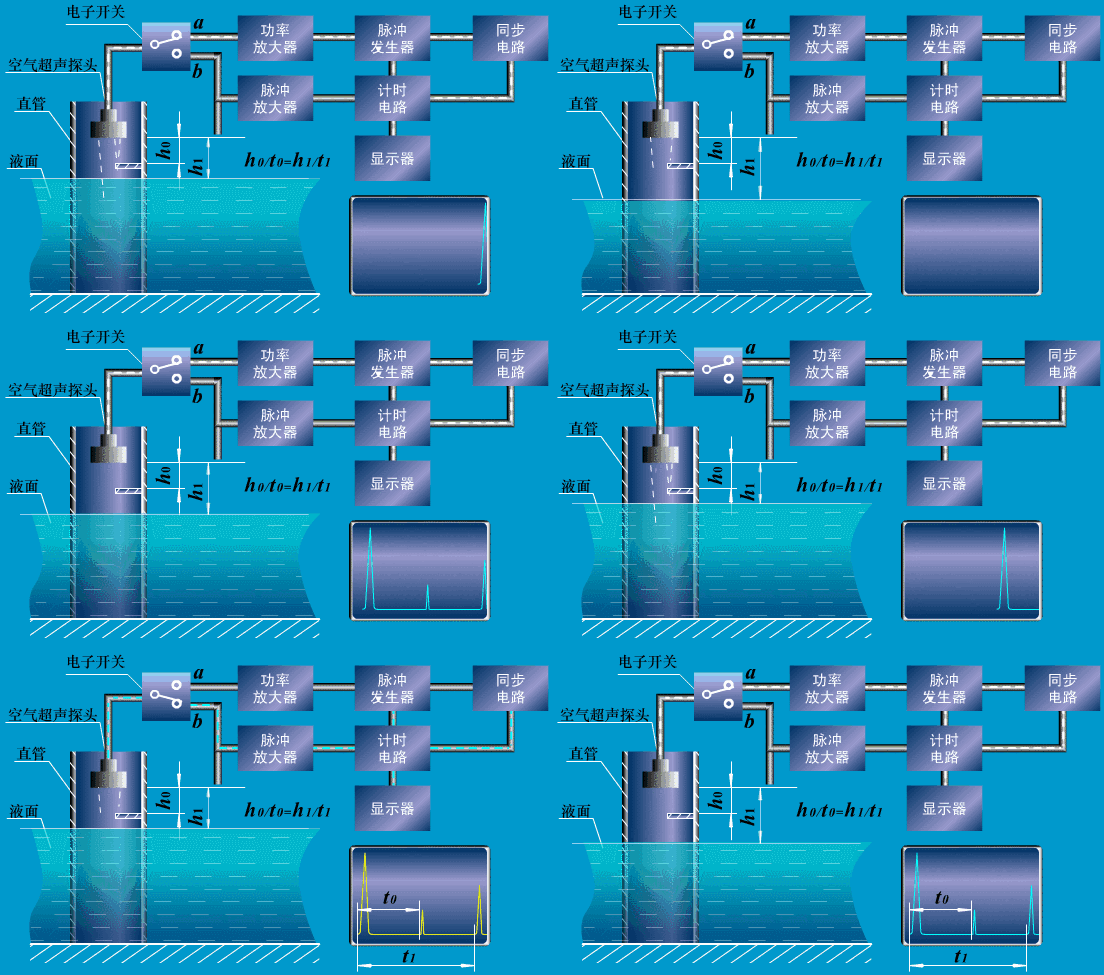
Ultrasonic level gauge is through a device that can transmit energy waves (generally pulse signal) to transmit energy waves, the energy waves encounter obstacles reflected by a receiving device to receive the reflected signal.
According to measure the time difference of the energy wave movement process to determine the level change. The microwave signals are processed by an electronic device and finally converted into an electrical signal related to the level. The primary probe transmits ultrasonic pulse signals to the surface of the measured medium, the ultrasonic wave encounters the measured medium (obstacle) in the transmission process and then reflects, the reflected ultrasonic signal is detected by the electronic module and processed by the special software, which analyses the time difference between the emitted ultrasonic wave and the returned wave, and combines with the propagation speed of ultrasonic wave, the ultrasonic wave propagation can be calculated accurately and then can reflect the situation of the material level.
Ultrasonic level meter belongs to sound wave, need to have transmission medium, so it will be affected by the temperature and pressure in the tank.
Advantages: no mechanical transmission part, high reliability, is a non-contact measurement, and is not affected by the viscosity of the liquid, density and so on.
Disadvantages: there is a measurement of the blind spot, tank pressure is not recommended, can not measure volatile media.
11: Servo type liquid level gauge
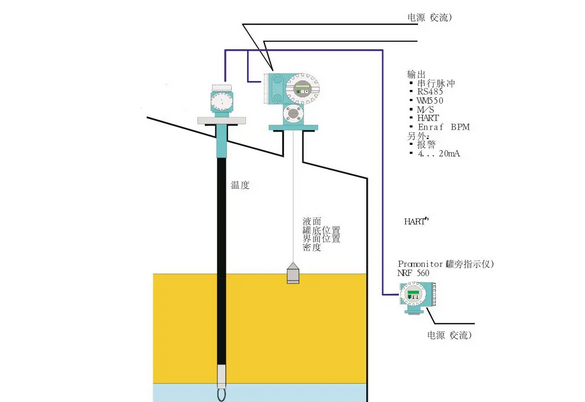
Servo level gauges are based on the principle of buoyancy equilibrium, where a micro-servo motor drives a smaller float, which can accurately measure the liquid level and other parameters. When the level gauge is in operation, the gravitational force of the float acting on the fine steel wire generates a moment on the magnet of the outer drum, which causes a change in magnetic flux.
The change in magnetic flux between the wheel drum components leads to a change in the output voltage signal of the electromagnetic sensor (Hall element) on the inner magnet. The voltage value is compared to a reference voltage stored in the CPU. When the position of the float is balanced, the difference is zero. When the level of the measured medium changes, this causes the float buoyancy to change. As a result, the magnetic coupling moment is altered, causing the output voltage of the Hall element with temperature compensation to change.
The difference between this voltage value and the reference voltage in the CPU drives the servomotor, which adjusts the float to move up and down to reach the equilibrium point again. The whole system constitutes a closed-loop feedback loop, the accuracy of which can reach ± 0.7mm, and, with its own pendant compensation function, can compensate for the wire or float attached to the measured medium caused by the change in the tension of the wire.
Instrumentation through the float detection buoyancy, through the measurement of steel wire detection tension and length measurement of liquid level.
Advantages: not only can measure the level of the medium, but also has a density measurement function, oil-water interface measurement function, the average density of the medium and density distribution measurement function.
12: Tuning Fork Liquid Level Gauge Switch
Principle:
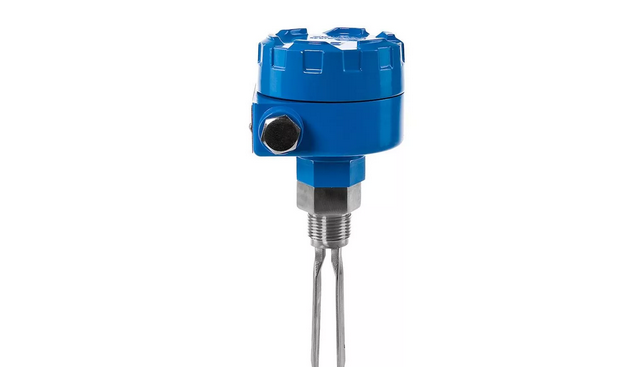
The tuning fork level controller is a new type of level switch. It is designed using the principle of tuning fork vibration. In the base of the inductor bar of the tuning fork level switch, the tuning fork bar is driven by a piezoelectric chip, and another piezoelectric chip receives the vibration signal, so that the vibration signal can be circulated and the inductor bar resonates.
When the material comes into contact with the bar, the vibration signal gradually decreases until it stops resonating and the control circuit outputs an electrical contact signal. Due to the natural principle that the sensibility of the inductor bar decreases from the front end to the back seat, so when the material in the barrel tank and the barrel around the upward accumulation, touching the base of the inductor bar (back) or discharge, will not generate false signals.
Simply put, the tuning fork in the piezoelectric crystal excitation generates mechanical vibration, this vibration has a certain frequency and amplitude. When the tuning fork is submerged by a liquid or solid, the frequency and amplitude of the vibration of the tuning fork will change. This frequency change is detected by the electronic circuit and outputs a switching quantity.
Scope of application and characteristics.
Tuning fork level switch is a new type of level switch. It is suitable for almost all liquid media, and also suitable for measuring medium density solid powders or particles that can flow freely. Since the tuning fork level switch basically has no moving parts, mechanical wear and tear is relatively low, so there is no need for maintenance and adjustment, simple and convenient to use.