
Although the principle of gas and liquid turbine flowmeter is similar, but because of the differences in media characteristics in the design is very different: gas meter pursuit of lightweight and high sensitivity, the liquid meter emphasises pressure resistance and structural strength, interchangeable use will lead to serious errors.
Gas turbine flowmeter and liquid turbine flowmeter is similar in principle, are through the turbine rotation to measure the flow rate, but because of the differences in media characteristics, the design and use of significant differences. The following are the main differences:
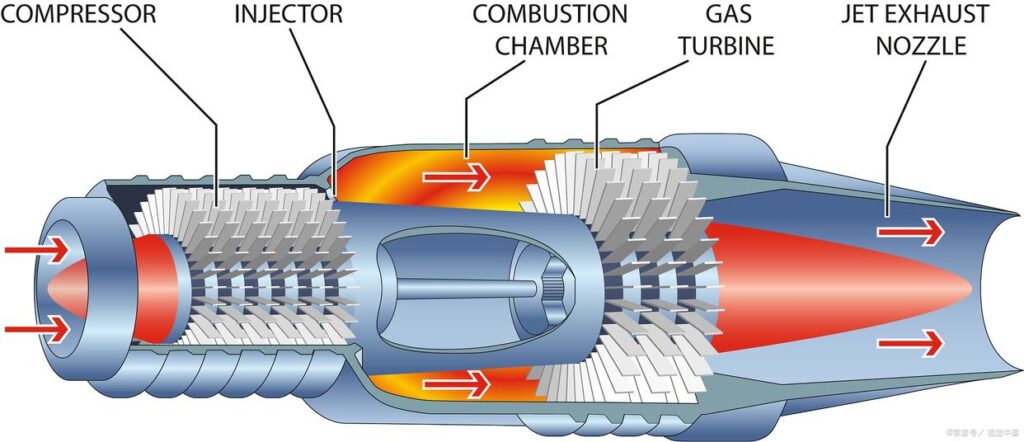
gas flowmeter and liquid flowmeter
- Differences in media properties
Density and Viscosity
Gases with low density and low viscosity require low starting torque and lighter weight designs (e.g. thin blades, low friction bearings).
Liquids with high density and viscosity require higher driving forces, more robust construction and corrosion resistant bearings (e.g. tungsten carbide).
Compressibility
Gases are compressible and need to take into account the effect of pressure/temperature on the volumetric flow rate, usually with temperature and pressure compensation.
Liquids are incompressible and generally do not require compensation (except for high pressure or high temperature conditions).
- Structural design
Impeller and bearing
Gas type: impeller material is light (e.g. aluminium alloy), blade angle is large, bearings are mostly low-friction magnetic levitation or ceramics.
Liquid type: the impeller is corrosion-resistant (such as stainless steel), the blade is short and thick, and the bearing is often wear-resistant carbide.
Flow range
High gas flow rate (usually 10-50 m/s), wide range ratio (e.g. 100:1).
Liquid flow rate is low (1-3 m/s), range ratio is narrow (e.g. 10:1).
- Signal detection and processing
Gas type: due to the low density medium signal is weak, need high sensitivity sensor (such as inductive) and amplification circuit.
Liquid type: the signal is strong, conventional magnetic or Hall sensor can meet.
- Installation and working condition requirements
Straight pipe section: gas is susceptible to eddy current, need to be longer before and after the straight pipe section (before 20D after 5D, D is the diameter of the pipe); liquid usually before 10D after 5D.
Flow direction: gas may flow in both directions, part of the design needs to prevent backflow; liquid is mostly unidirectional.
Pressure loss: gas is sensitive to pressure loss, design needs to be optimised to reduce pressure drop; liquid is more resistant.
- Calibration and units
Calibration medium: gas meters are calibrated with air or nitrogen, liquid meters with water or actual liquid.
Units: Normal volume flow rate (Nm³/h) for gases, actual volume flow rate (m³/h) or mass flow rate for liquids.
- Application Scenarios
Gas type: natural gas metering, compressed air, gas, etc., need explosion-proof certification (such as ATEX).
Liquid type: water, petroleum, chemical liquids, focusing on pressure resistance and corrosion prevention.
- Temperature and pressure adaptability
Gas type: often resistant to high temperature (e.g. -20°C~150°C), low and medium pressure (≤10MPa).
Liquid type: narrower temperature range (0°C~80°C), but high pressure resistance (up to 50MPa).

How to choose the right liquid flowmeter
Proper selection of a flowmeter type requires a combination of factors to ensure measurement accuracy, reliability and economy. The following are systematic selection steps and key considerations:
I. Define application scenarios and fluid properties
- Fluid type
Liquid, gas, steam, slurry or multiphase flow?
Conductivity: Electromagnetic flowmeter is only applicable to conductive liquids (conductivity > 5μS/cm).
Viscosity: high viscosity fluids (e.g. oils) are suitable for volumetric or Coriolis mass flow meters, not turbine flow meters.
Corrosive / hygienic requirements: choose the material (e.g. Hastelloy, PTFE lining) or hygienic design (food / pharmaceutical industry).
- Fluid condition parameters
Temperature and pressure range: Ensure that the flowmeter’s ability to withstand temperature and pressure covers the working conditions (e.g. steam needs to withstand high temperatures).
Impurities: particles or bubbles in the fluid need to wear-resistant design (such as insertion electromagnetic flowmeter) or to avoid the use of impurity-sensitive instruments (such as turbine).
Second, determine the measurement needs
- Flow range
Determine the minimum and maximum flow rate, select the range ratio (Rangeability) of the appropriate instrument. For example:
ultrasonic flowmeter range ratio is wide (up to 100:1).
Differential pressure type range ratio is narrow (usually 3:1).
- precision requirements
Trade settlement: the need for high precision (such as mass flow meter ± 0.1%).
Process control: acceptable ± 1% to 2% error (such as vortex flowmeter).
- Output signal and function
Do you need 4-20mA, pulse output, Modbus communication or wireless telecommunication?
Do you need local display, data logging or remote monitoring?
Evaluation of installation conditions
- Pipe parameters
Pipe size: some flow meters (such as electromagnetic) on the larger pipe size is more cost-effective.
Pipe direction: some instruments need to be installed full pipe (such as electromagnetic), gas measurement may require vertical pipe. 2.
- straight pipe section requirements
Vortex, differential pressure flowmeter needs a long straight pipe section before and after (usually 10D before and 5D after), while ultrasonic or mass flowmeter requirements are lower.
- Environmental restrictions
Vibration: avoid using vortex flowmeter in strong vibration environment, optional mass flowmeter.
Space: compact space can choose insertion type or clamping type (such as ultrasonic).
IV. Economic Analysis
- Initial cost
Low budget can choose economical some flowmeter; high-precision scenarios need to accept the high cost of flowmeter.
- Maintenance cost
Meter with no moving parts (e.g. ultrasonic, electromagnetic) has low maintenance cost; turbine flowmeter needs regular cleaning and maintenance of bearings.
- Lifetime and Calibration
Coriolis flowmeters have a long life but are complicated to calibrate; volumetric flowmeters require regular lubrication.
V. Common Flow Meter Types and Usage Scenarios
| Types | Applicable Fluid | Advantages | Limitations |
———————|—————————–|———————————–
| Electromagnetic flowmeter | Conductive liquids (water, acid and alkali liquids) | No pressure loss, corrosion resistance, high accuracy | Not suitable for gases/non-conductive liquids |
| Vortex Flow Meter | Gases, Steam, Clean Liquids | Wide range, high temperature and pressure resistance | Sensitive to vibration, need straight pipe section |
| Ultrasonic Flow Meter | Clean liquids/gases | No pressure loss, easy to install, cost-effective for large diameters | Sensitive to bubbles/particles, high price |
| Mass Flow Meter | Any fluid (liquid/gas) | Direct measurement of mass flow rate, high accuracy | High cost, difficult to install in large pipe diameters |
| Differential Pressure Flow Meters | Liquid, Gas, Steam | Simple structure, versatility | Narrow range ratio, large pressure loss, the need for supporting instruments |
| Turbine Flow Meters | Low viscosity clean liquids / gases | Fast response, high accuracy | Not wear-resistant, require regular maintenance |
| Volumetric Flow Meter | High viscosity liquids (oils) | High accuracy | High cost, difficult to install large pipe diameter | High-viscosity liquids (oil) | High accuracy, suitable for small flows | Complex structure, large pressure loss |
Six, the selection process summary
- Collect data on working conditions: fluid type, temperature, pressure, pipe diameter, flow range, etc. 2.
- exclude the type of inapplicability: for example, gas measurement excluded electromagnetic flowmeter. 3.
- matching accuracy and range: priority to meet the key performance indicators.
- Evaluate installation feasibility: check straight pipe sections, vibration, space constraints. 5.
- Cost trade-offs: choose the most cost-effective solution within budget.
- Consult the supplier: Provide detailed working condition parameters and get customised suggestions.
Typical application examples
Tap water / sewage: electromagnetic flowmeter (conductive liquids).
Saturated steam: vortex flowmeter (high temperature resistant).
Oil/gas trade: mass flowmeter/gas turbine flowmeter (high precision mass measurement).
Food and beverage: sanitary ultrasonic or volumetric flowmeter.
Caution:
Avoid selecting flow meters based on price or brand name alone, and combine them with the long-term cost of use.
Complex conditions (such as multiphase flow, non-Newtonian fluids) recommended joint manufacturers test.
Regular maintenance and calibration is the key to ensure long-term accuracy.
Systematic analysis can significantly reduce the risk of selection errors and ensure efficient and stable operation of the flowmeter.
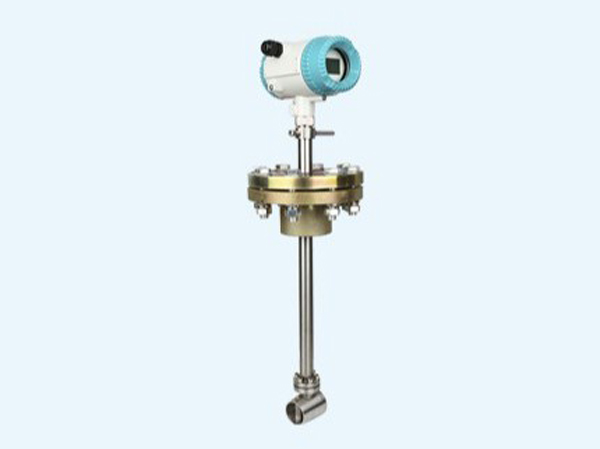
How to choose the right gas flow meter
Choosing the right gas flow meter requires a combination of factors to ensure the accuracy and reliability of the measurement. Here are some key steps and recommendations to help you choose the right gas flowmeter:
I. Define measurement requirements
Gas type:
Determine the type of gas to be measured (e.g. natural gas, carbon dioxide, hydrogen, etc.). The physical properties of different gases (e.g. density, viscosity, corrosivity, etc.) will affect the choice of flow meter.
Examples: hydrogen density is low, you need to choose a high sensitivity flowmeter; corrosive gases (such as chlorine) need to choose corrosion-resistant materials flowmeter.
Flow range:
Determine the flow range of the gas. The measurement range of the flowmeter should cover the flow range in the actual application to ensure the measurement accuracy.
Example: If the flow range is wide, it is recommended to choose gas ultrasonic flowmeter or thermal gas mass flowmeter.
Accuracy Requirements:
Determine the required measurement accuracy based on the application requirements. Higher accuracy measurements usually require more expensive equipment.
Example: Laboratory measurements require high accuracy (e.g. ±0.5%), whereas industrial monitoring may only require moderate accuracy (e.g. ±2%).
Environmental conditions:
Consider the environment in which the flowmeter will be installed, including temperature, humidity, pressure, and electromagnetic interference.
Example: in a high-temperature environment, you need to choose a high-temperature-resistant flowmeter; in a high humidity environment, you need to take moisture-proof measures.
Second, choose the type of flowmeter
Thermal gas mass flow meter:
Features: direct measurement of mass flow, independent of gas density and pressure changes, suitable for low flow rate and small flow rate gas measurement.
Applicable scenes: laboratory, semiconductor manufacturing, environmental monitoring, etc.
Gas turbine flowmeter:
Features: high precision, good repeatability, suitable for clean gas measurement at medium and high flow rates.
Applicable scenes: industrial pipeline, natural gas transmission, air flow measurement, etc.
Gas ultrasonic flowmeter:
Features: non-contact measurement, no mechanical wear, suitable for a wide range of flow rate gas measurement.
Applicable scenes: large industrial pipelines, gas transmission, environmental protection monitoring, etc.
Third, consider the installation and maintenance
Installation requirements:
Ensure that the flowmeter is installed in a straight section of the pipe, avoid installation in the vicinity of elbows, valves, etc., in order to reduce the flow field interference.
Example: gas turbine flowmeter usually requires upstream straight section length of 10 times the pipe diameter, downstream of 5 times the pipe diameter; ultrasonic flowmeter requirements are higher, upstream of 15 times the pipe diameter, downstream of 10 times the pipe diameter.
Maintenance requirements:
Choose a low maintenance requirements of the flowmeter, you can reduce long-term operating costs.
Example: ultrasonic flowmeter low maintenance needs, while the turbine flowmeter needs regular cleaning and calibration.
Fourth, consider the cost
Equipment cost:
Choose a cost-effective flowmeter based on your budget. Highly accurate flowmeters (e.g. thermal gas mass flowmeters) are usually more expensive, but may have lower long-term running costs.
Example: Thermal mass flow meters are more expensive, but have low maintenance costs and are suitable for high accuracy measurements.
Long-term costs:
Consider the long-term operating costs of the flowmeter, including the cost of maintenance, calibration and replacement parts.
V. SUMMARY
Selecting a suitable gas flowmeter requires comprehensive consideration of factors such as gas type, flow range, accuracy requirements, environmental conditions, installation and maintenance needs, and cost. The following are some specific recommendations:
High accuracy measurement: choose a thermal gas mass flow meter.
Medium to high flow rate measurement: choose a gas turbine flow meter.
Wide range flow rate measurement: choose a gas ultrasonic flow meter.
Harsh environment: choose high temperature and corrosion resistant flowmeter.
Low maintenance requirements: choose ultrasonic flowmeter.