Coriolis Mass Flow Meters: The “Eyes of Wisdom” in Industry
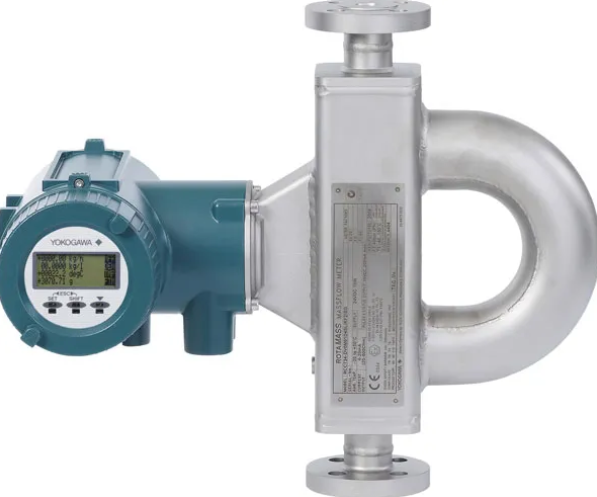
In modern industrial piping systems, Coriolis mass flow meters act as a pair of precise “eyes of wisdom,” monitoring fluid dynamics in real time. This measurement device, based on the Coriolis effect, directly calculates mass flow by detecting the phase difference generated by the fluid in a vibrating tube, thereby overcoming the limitations of traditional volumetric flow meters that rely on density compensation. Its core principle stems from the phenomenon of inertial forces discovered by French physicist Édouard Coriolis in 1835—when a fluid moves within a rotating system, an additional force perpendicular to the direction of motion is generated. Engineers have translated this theory into practice by designing U-shaped, straight-tube, or Ω-shaped measuring tubes that vibrate. As the fluid flows through the pipe, the Coriolis force causes minute torsional deformations, and electromagnetic sensors capture the resulting phase difference signals. This direct method of measuring mass flow achieves an accuracy of ±0.1%, making it an indispensable metrological tool in sectors such as petrochemicals, food, and pharmaceuticals.
Compared to orifice plate flowmeters, turbine flowmeters, or electromagnetic flowmeters, Coriolis mass flowmeters offer three major technical advantages. First, they enable simultaneous measurement of multiple parameters, with a single device capable of outputting data such as mass flow rate, density, and temperature. For example, in a certain liquefied natural gas (LNG) project, the HOMKOM HK-CMF series can simultaneously monitor energy flow. Second, its measurements are unaffected by fluid properties; it maintains stable accuracy whether measuring high-viscosity crude oil (up to 3,000 cP) or beer containing bubbles. Most notably, it completely eliminates the need for upstream and downstream straight pipe runs, making it particularly effective in space-constrained marine fuel systems. These characteristics make it the preferred choice for critical applications such as trade settlement and formulation control, with the global market size projected to exceed $2.5 billion by 2026.
In practical applications, Coriolis mass flow meters are continuously pushing the boundaries of technology. In the Xinjiang coal-to-gas project, high-temperature sensors can withstand synthesis gas at 450°C; in the semiconductor industry, micro-flowmeters with a measuring tube diameter of just 1.6 mm achieve an accuracy of 0.5% FS. The addition of intelligent diagnostic functions gives them “self-checking” capabilities—for example, Emerson’s High-Precision series can automatically detect electrode corrosion or liner wear. However, challenges remain. For ultra-low flow rates (<0.1 kg/min) in pharmaceutical filling, specialized drive circuits are still required; and for multiphase flow measurement, multi-sensor fusion technology must be employed—for example, Crossley’s dual-tube differential design can control measurement errors in gas-liquid mixtures to within 1.5%.
Future trends are focused on material innovation and digital integration. Titanium alloy measuring tubes extend the service life for corrosive media to over 10 years, while the use of ceramic materials enables sanitary flowmeters to meet FDA 3-A standards. In the context of the Industrial Internet of Things (IIoT), Siemens’ SITRANS FC430 already supports the Modbus TCP protocol, enabling predictive maintenance. Notably, the emergence of micro-MEMS Coriolis sensors has made chip-level flow detection possible; laboratory prototypes can already measure minute flows as low as 0.01 g/min, which will bring revolutionary changes to the biopharmaceutical sector. As one academician of engineering remarked: “As flow measurement transitions from indirect estimation to direct sensing, Coriolis technology is redefining the boundaries of precision in process control.”