There are various types of flow meters, ranging from high-precision Coriolis mass flow meters to simple and intuitive float flow meters, each with unique principles and application scenarios, such as small flow measurement in petrochemicals, pharmaceuticals, or laboratories, to meet different industrial needs.
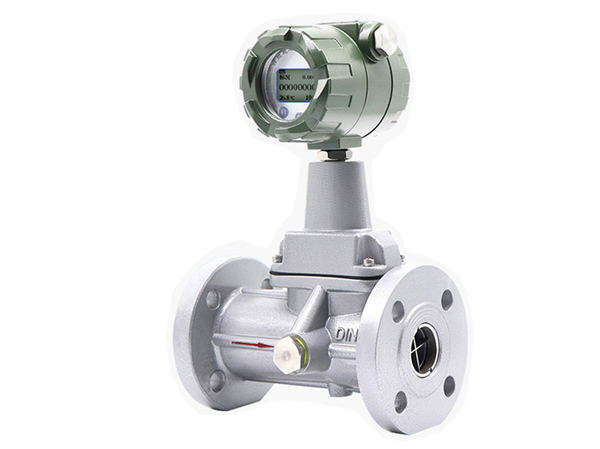
Overview of Flow Meter Types
As a key device for measuring fluid flow, flow meters come in various types, each with its unique working principle and application areas. According to different measurement principles and working methods, flow meters can be roughly divided into the following categories:
- Positive displacement flowmeter: This type of flowmeter, such as elliptical gear flowmeter and piston flowmeter, calculates the total flow rate by directly measuring a fixed volume of fluid.
- Velocity flow meters: including turbine flow meters, electromagnetic flow meters, and ultrasonic flow meters, which measure the flow velocity of fluids and calculate the flow value.
- Mass flow meters: such as Coriolis mass flow meters and thermal mass flow meters, which directly measure the mass of the fluid rather than its volume.
- Differential pressure flowmeter: such as orifice flowmeter and Venturi flowmeter, they use the pressure difference generated when the fluid passes through the throttling device to calculate the flow rate.
- Float flowmeter: For example, a rotor flowmeter reflects the flow rate by measuring the position of the float in a conical tube.
In addition, there are other types of flow meters, such as open channel flow meters and optical flow meters, which play an important role in specific application scenarios.
Detailed explanation of flowmeter principle
Principle of positive displacement flowmeter
The core principle of a volumetric flowmeter is to calculate the flow rate by the number of discharges after filling a fixed volume of fluid. This method is simple and intuitive. Filling a fixed volume with fluid and obtaining the flow rate value through the number of discharges is a simple and intuitive method.
Principle of velocity flowmeter
A velocity flowmeter utilizes the mathematical relationship between velocity and flow rate, i.e. Q=A × v (where Q represents flow rate, A is the cross-sectional area of the fluid, and v is the velocity), to convert velocity into flow rate value. Use the Q=A × v formula to convert flow velocity into flow rate.
Principle of Mass Flow Meter
In terms of mass flow meters, Coriolis mass flow meters calculate mass flow by measuring the Coriolis force generated by the fluid in a vibrating tube, while thermal mass flow meters calculate mass flow by measuring the heat carried away by the fluid. Coriolis force or thermal method is used to calculate mass flow rate.
Principle of differential pressure flowmeter
Differential pressure flowmeter works according to Bernoulli equation, and the pressure difference generated when the fluid passes through the throttling element is closely related to the flow rate. According to the Bernoulli equation, the pressure difference is correlated with the flow rate.
Principle of float flowmeter
The principle of a float flowmeter is that the buoyancy and gravity of the float in the fluid reach equilibrium, and the change in its position directly reflects the increase or decrease in flow rate. Using buoyancy and gravity balance, position changes represent flow rate.
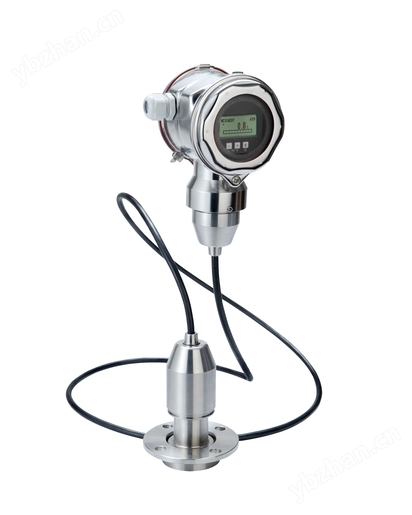
Applications and Fields of Flowmeters
Application of positive displacement flowmeter
Positive displacement flow meters are mainly applied in the petrochemical and food industries, and are particularly suitable for measuring high viscosity liquids such as oils. Commonly used in the petrochemical and food industries, suitable for high viscosity fluids.
Application of velocity flowmeter
The turbine flowmeter in the velocity flowmeter is commonly used for measuring clean liquids and gases, such as water treatment and gas metering. Involving fields such as water treatment and gas metering.
Application of Quality Flow Meter
Mass flow meters perform well in high-precision measurement fields, such as chemical, pharmaceutical, and food processing industries. Excellent performance in high-precision fields such as chemical and pharmaceutical industries.
Application of differential pressure flowmeter
Differential pressure flow meters play an important role in industrial pipeline flow measurement, accurately measuring steam, gas, and liquid. Widely used in industrial pipelines, steam, gas, and liquid measurement.
Application of Float Flow Meter
Finally, due to its simple and intuitive characteristics, the float flowmeter performs well in small flow measurement, such as laboratory and gas analysis applications. Suitable for small flow applications such as laboratories and gas analysis.
Analysis of the advantages and disadvantages of flowmeter
Advantages and disadvantages of volumetric flowmeter
The advantage of volumetric flow meters is their high precision, making them particularly suitable for measuring high viscosity fluids. However, it is not suitable for fluids containing particles as these particles may cause wear. High precision, but not suitable for fluids containing particles.
Advantages and disadvantages of speed flowmeter
Velocity flow meters, especially turbine flow meters, are appreciated for their fast response and relatively high accuracy. However, it is worth noting that they have high requirements for fluid cleanliness and are prone to damage due to wear and tear. Quick response, but requires clean fluid.
Advantages and disadvantages of quality flow meters
The mass flow meter can directly measure the mass flow rate, therefore it has extremely high accuracy. However, its high price and complex installation requirements limit its widespread application. High precision, but high price.
Advantages and disadvantages of differential pressure flowmeter
Differential pressure flow meters are popular due to their simple structure and wide range of applications. However, it is worth noting that it may cause significant pressure loss and its accuracy may be affected by fluid properties. Simple and applicable, but with pressure loss.
Advantages and disadvantages of float flowmeter
Float type flow meters are popular for their intuitiveness and low cost. However, at the same time, its lower accuracy and limited applicability are also significant drawbacks that cannot be ignored. Low cost, limited accuracy.